Lolita in the Afterlife: On Beauty, Risk, and Reckoning With the Most Indelible and Shocking Novel of the Twentieth Century by Jenny Minton Quigley
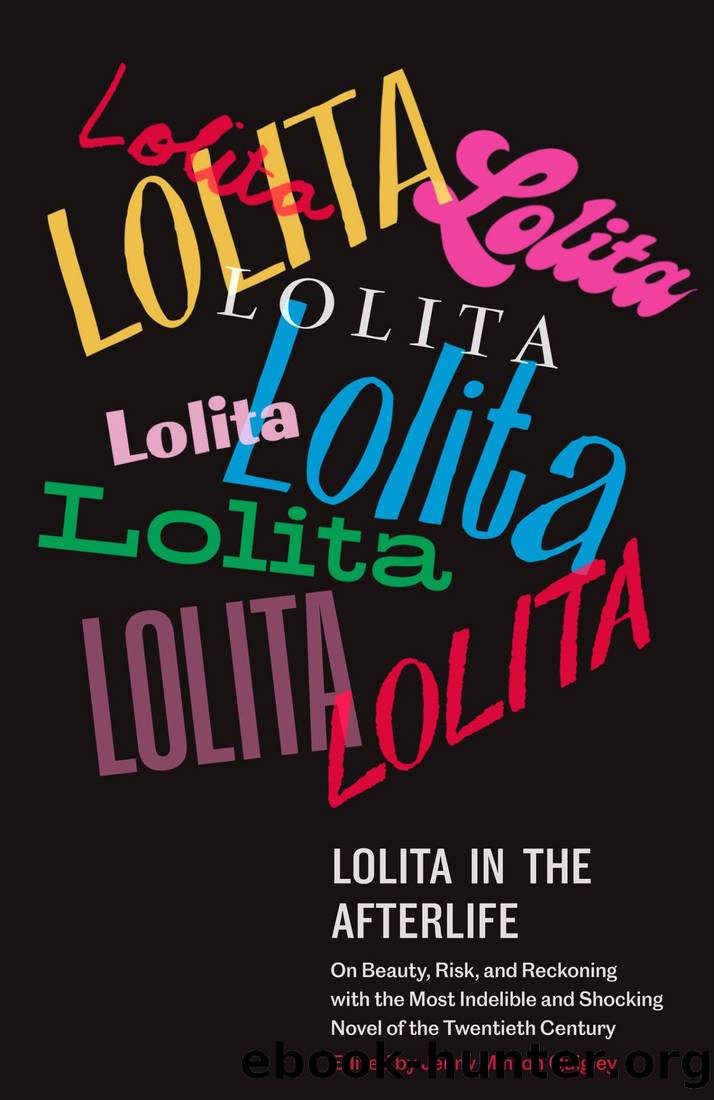
Author:Jenny Minton Quigley [Quigley, Jenny Minton]
Language: eng
Format: epub
Tags: literary theory
ISBN: 9781984898845
Google: MyfzDwAAQBAJ
Publisher: Knopf Doubleday Publishing Group
Published: 2021-03-16T04:00:00+00:00
Here Lolita is not only in full possession of her autonomy, but sheâs now being painted as a bit of a harlot. Cyrus is choosy, but Lolita? Sheâs a gate the world left open. The lyric reads as slut-shaming and is thus comically distant from the novel, which wouldnât last more than twenty pages if Lolita were so easy to ensnare. More importantly, the song makes it clear that love is reserved for good girls. Lolita is a sex object, which has the de facto effect of turning Humbert into someone with a broad range of attractions. He is being spoken to directly, as if being convinced of something. But Nabokovâs Lolita is not about a forbidden romance with a man who can be talked into submission. Itâs about a pedophile who can only be aroused by underage girls. This is an un-fun fact absent not just from Cyrusâs music but from all pop music on the subject.
In Katy Perryâs âOne of the Boys,â she studies Lolita âreligiously,â after which she walks âright into school and caught you staring at me.â For Perry, Lolita is code, a password into the society of womanhood. The song also features her reading Seventeen and shaving her legs for the first time. Itâs about achieving dominance over Perryâs male peers, who, if they are more experienced than she, itâs not because they have twenty-five years on her. She wishes to prove to her guy friend that she is not âone of the boysâ and instead wants to be seen as a âpinupâ or a âhomecoming queen.â Dealerâs choice. Perry studies Lolita the way one puts on lipstick, so that she (or her musical persona) can become more appealing sexually. But she does not read Lady Chatterleyâs Lover to achieve the same effect. Why? Maybe because itâs hard to cram âLady Chatterleyâs Loverâ into a song lyric.
Or maybe itâs because, as Perry has explained in interviews, âI have this obsession with Lolita, and I think itâs because sheâs both innocent and sheâs a little bit of a sex kitten as well and she walks that line. And I think itâs boring if youâre too goody-two-shoes and you come out lookinâ like a slut if youâre a bad girl all the time, so you gotta walk that line.â Whether she is referring to the male expectation that a woman carry herself a certain way (the lady-in-the-streets/freak-in-the-sheets theorem) or her most desired version of herself is, in this instance, irrelevant. Whatâs relevant is that when she says âLolita,â she is referring to grown women, to the line any adult woman of any adult age must walk. âFeeling v Lolita rn,â she once tweeted, along with a selfie in a low-cut black negligee, her hair up in two twists. For someone so enamored of the novel, it would make more sense for the accompanying photo to be of her pumping gas in the middle of nowhere.
In the past decade, the music world has hit a serious Lolita zenith with one white lady singer and one white lady singer only: Lana Del Rey.
Download
This site does not store any files on its server. We only index and link to content provided by other sites. Please contact the content providers to delete copyright contents if any and email us, we'll remove relevant links or contents immediately.
The Fine Print (Dreamland Billionaires Book 1) by Lauren Asher(2550)
Fury of Magnus by Graham McNeill(2444)
The Last House on Needless Street by Catriona Ward(2388)
The Rose Code by Kate Quinn(2195)
A Little Life: A Novel by Hanya Yanagihara(2121)
The God of the Woods by Liz Moore(1922)
Malibu Rising by Taylor Jenkins Reid(1914)
Luster by Raven Leilani(1898)
Transcendent Kingdom by Yaa Gyasi(1853)
Moonflower Murders by Anthony Horowitz(1842)
The Lost Book of the White (The Eldest Curses) by Cassandra Clare & Wesley Chu(1689)
This Changes Everything by Unknown(1500)
The Midwife Murders by James Patterson & Richard Dilallo(1485)
The New Wilderness by Diane Cook(1439)
The Lying Life of Adults by Elena Ferrante(1430)
Wandering in Strange Lands by Morgan Jerkins(1419)
Written in the Stars by Alexandria Bellefleur(1400)
Ambition and Desire: The Dangerous Life of Josephine Bonaparte by Kate Williams(1385)
The Lying Life of Adults by Elena Ferrante;(1308)
